English
-
Destinations
- Experiences
- Kilimanjaro
- Trip Ideas Skip to the content
Marangu Route
Marangu Route Overview
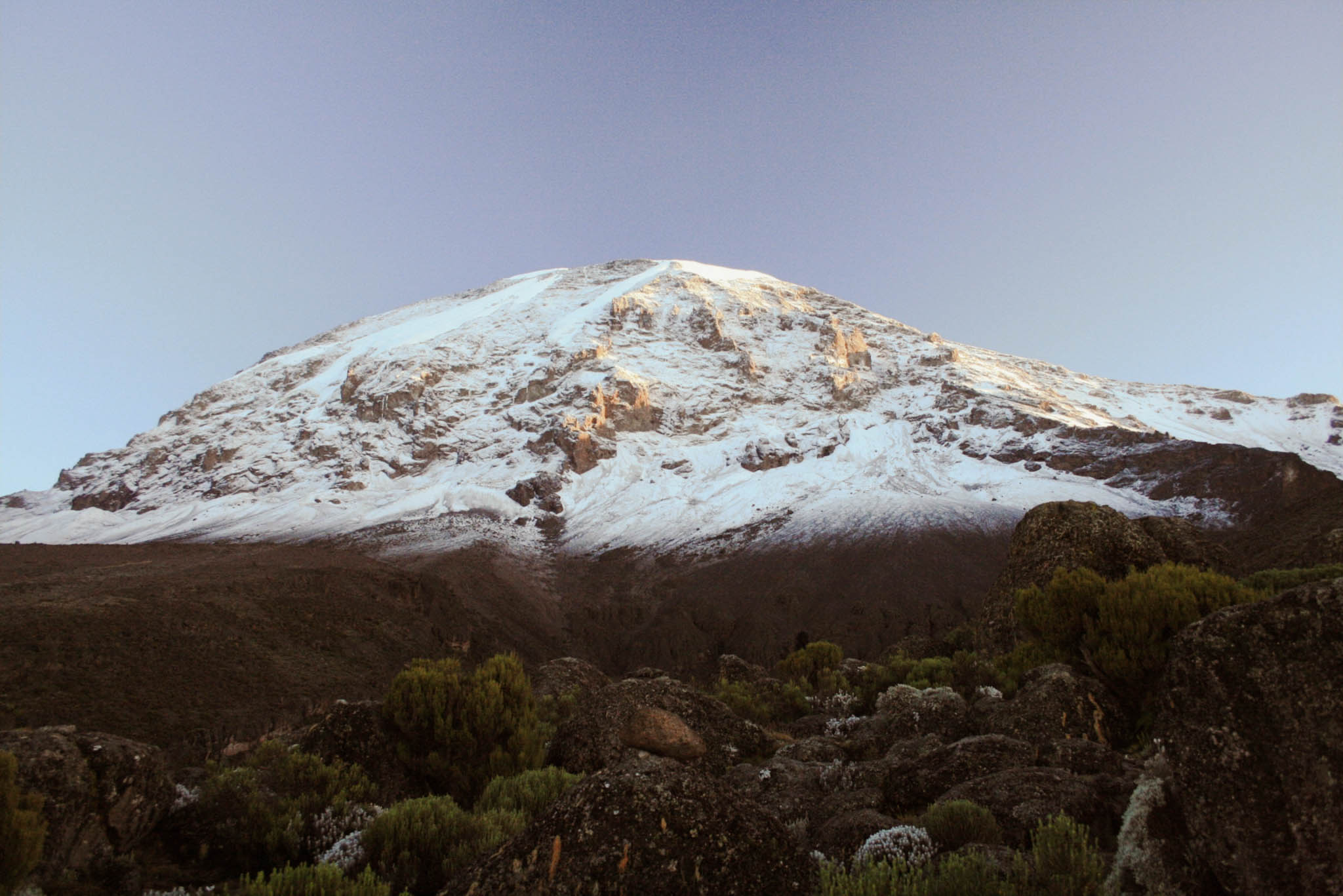
The Marangu Route — nicknamed the “Coca-Cola route” — is the oldest and most established way up Kilimanjaro, and the only one with permanent sleeping huts rather than tents. Approaching from the south-east, it climbs steadily through rainforest, moorland and alpine desert to the summit at Uhuru Peak, 5,895m, then descends the same trail. Its hut accommodation, gentle early gradients and shorter length make it a popular choice — though because it uses the same path up and down and is often walked in five days, it offers less acclimatisation than the longer camping routes.
Route at a Glance
Duration: 5 days on the mountain (a 6-day version adds an acclimatisation day)
Start & finish gate: Marangu Gate (1,860m), south-east Kilimanjaro
Summit: Uhuru Peak, 5,895m
Summit base: Kibo Hut (4,700m)
Accommodation: Permanent huts (the only Kilimanjaro route with huts)
Difficulty: Moderate underfoot, but limited acclimatisation
Best for: Those wanting hut comfort, and climbers preferring not to camp
Huts: Mandara · Horombo · Kibo
Success rate: Approximately 50–60% (5-day)
Why Choose the Marangu Route
The only route with huts. Marangu is the sole Kilimanjaro route with permanent sleeping huts — a proper bunk, a communal dining room and a wash basin at each camp. If the idea of camping for a week puts you off, this is your route.
Comfortable and well-established. As the oldest trail on the mountain, Marangu is well-supported and familiar. The early gradients are gentle, easing you into the climb.
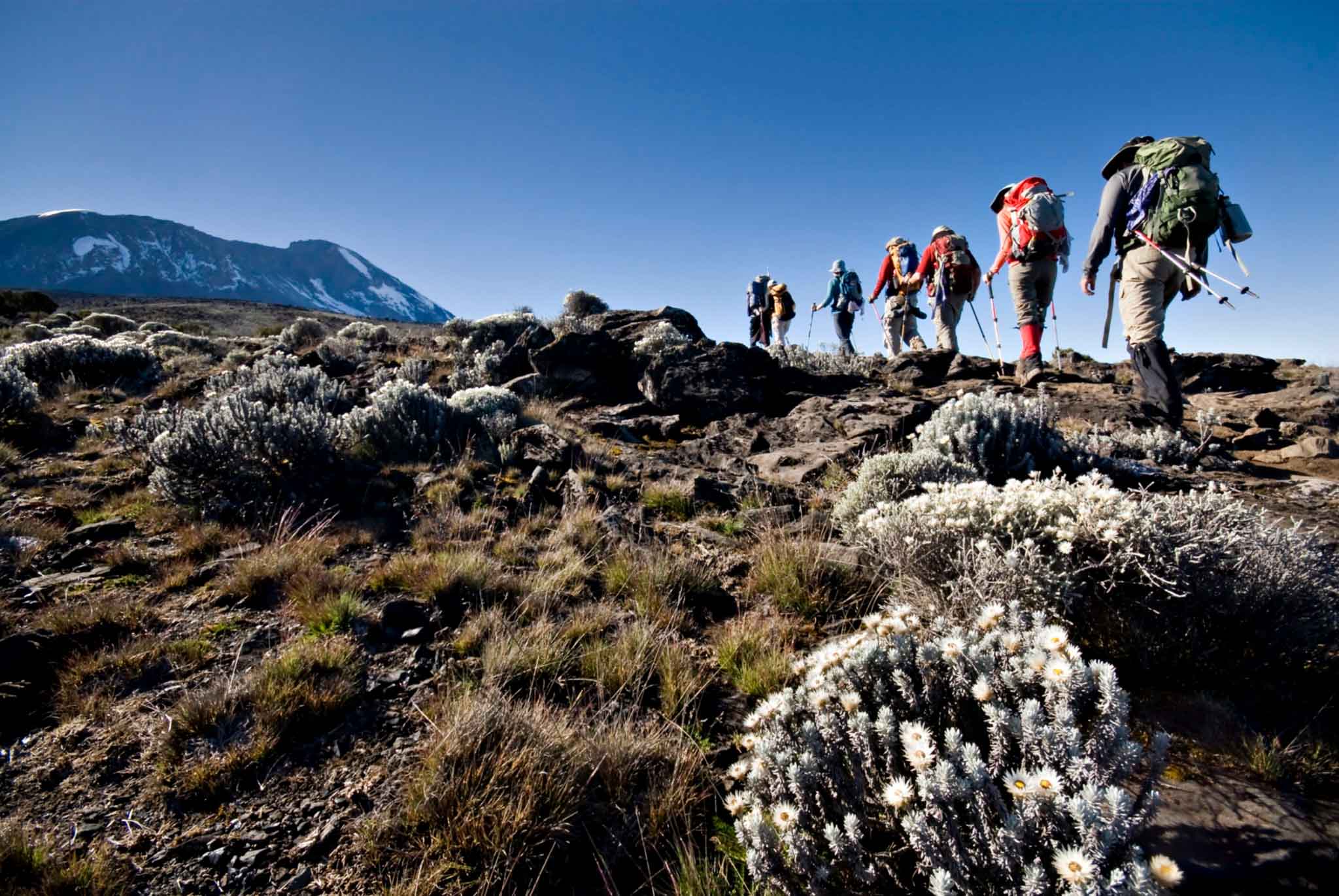
Five climate zones in five days. From equatorial rainforest to moorland, alpine desert and the glacial summit, Marangu compresses one of the most dramatic ecological sequences on earth into a short, accessible walk.
Good in the wetter months. With solid huts rather than tents, Marangu is a sensible choice when the weather is less reliable — you’re always sleeping under a roof.
Itinerary Summary
A day-by-day overview of the five-day climb. (For the full detailed itinerary with elevations and to book, see our 5-Day Marangu Route package.)
Day 1 — Marangu Gate (1,860m) to Mandara Hut (2,720m). Gentle rainforest walk, ~8 km; optional side trip to Maundi Crater.
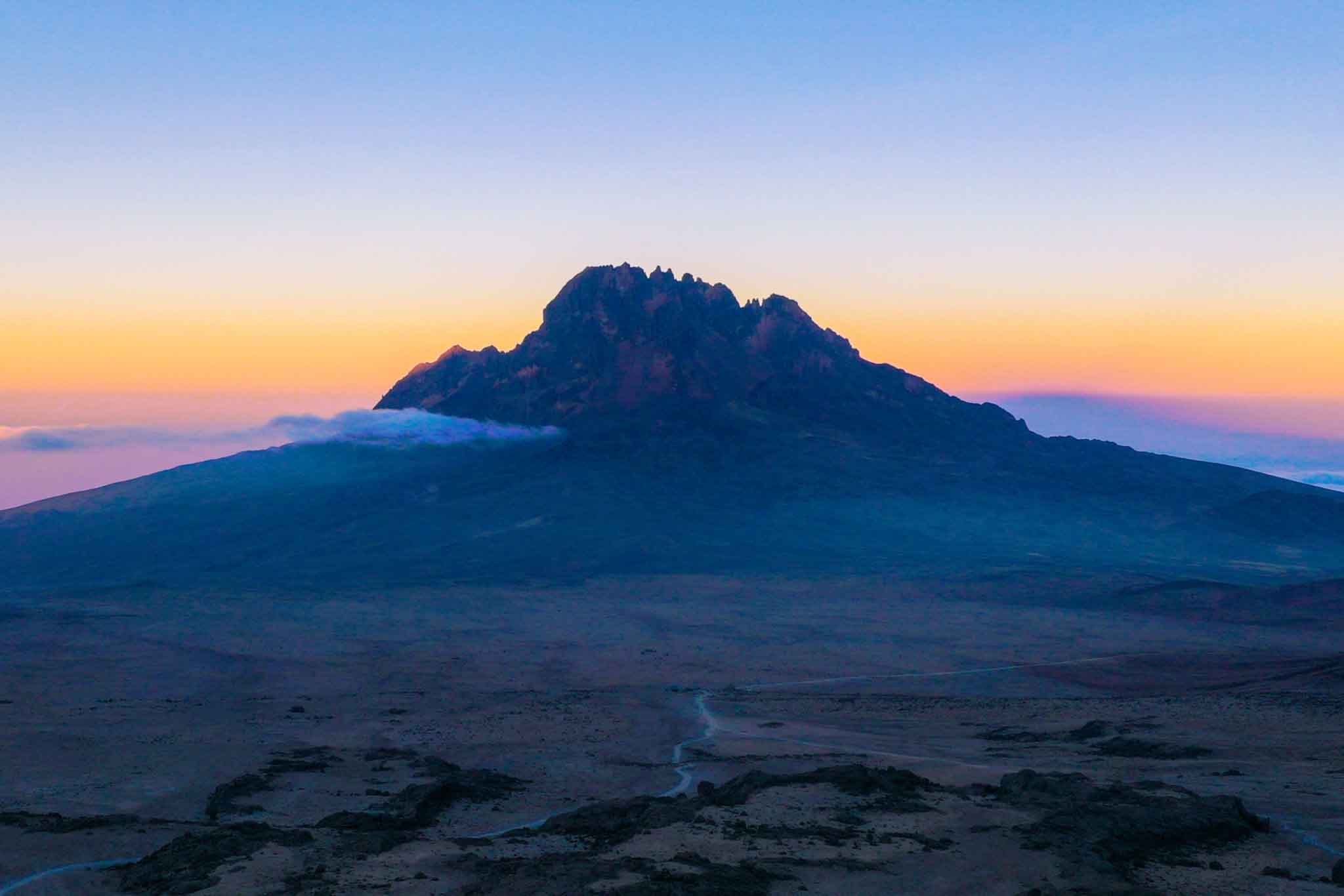
Day 2 — Mandara to Horombo Hut (3,720m). Into heath and moorland, giant lobelias, first views of Mawenzi and Kibo; the key acclimatisation day.
Day 3 — Horombo to Kibo Hut (4,700m). Across the barren Saddle between Mawenzi and Kibo to the summit base; early night.
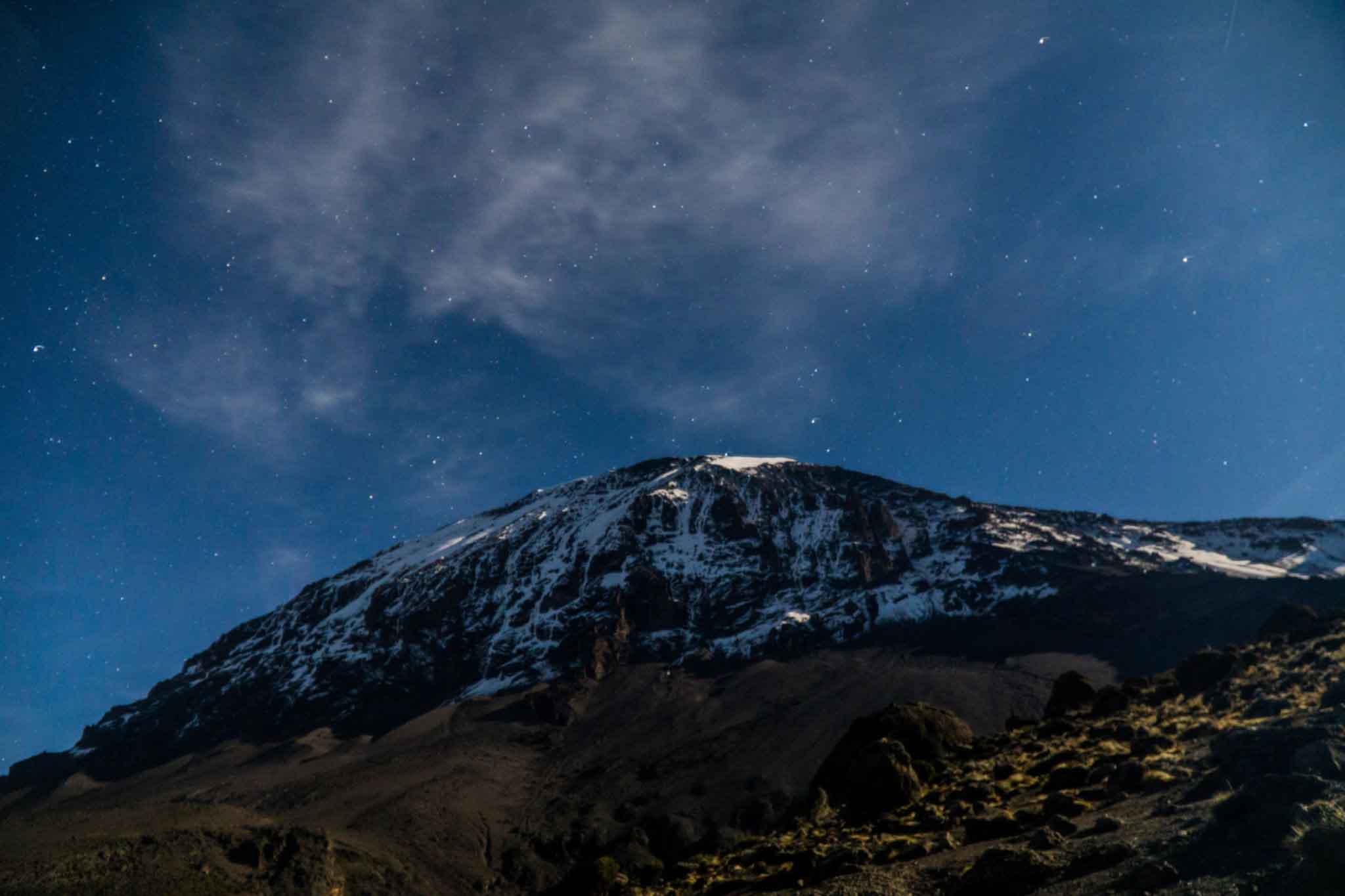
Day 4 — Summit Night: Kibo to Uhuru Peak (5,895m), descend to Horombo. Midnight start via Gilman’s Point (5,685m) to the roof of Africa at sunrise, then the long descent.
Day 5 — Horombo to Marangu Gate (1,860m). Long forest descent, and your summit certificate.
➡️ See the full day-by-day itinerary and book the 5-Day Marangu Route →
Difficulty & Success Rate
Marangu is gentle underfoot — the gradients are less steep than routes like Machame or Umbwe, and the huts remove the effort of camping. But there’s an important trade-off: because it ascends and descends by the same trail and is commonly climbed in just five days, it gives your body less time to acclimatise than the longer camping routes. That makes the altitude, not the terrain, the real hurdle — and it’s why the 5-day Marangu has one of the lower summit success rates on the mountain, at approximately 50–60%. Because more time to acclimatise is the single biggest factor in reaching the top, we also offer a 6-day Marangu with an extra acclimatisation night at Horombo, which improves the odds significantly. Just ask us if you’d prefer to climb over six days.
Best Time to Climb the Marangu Route
Marangu is best climbed in Kilimanjaro’s dry seasons — January to mid-March and June to October — for the clearest skies and firmest trails. That said, because it uses solid huts rather than tents, Marangu copes better than the camping routes in the wetter shoulder months, which is one of its practical advantages.
Weather & Terrain
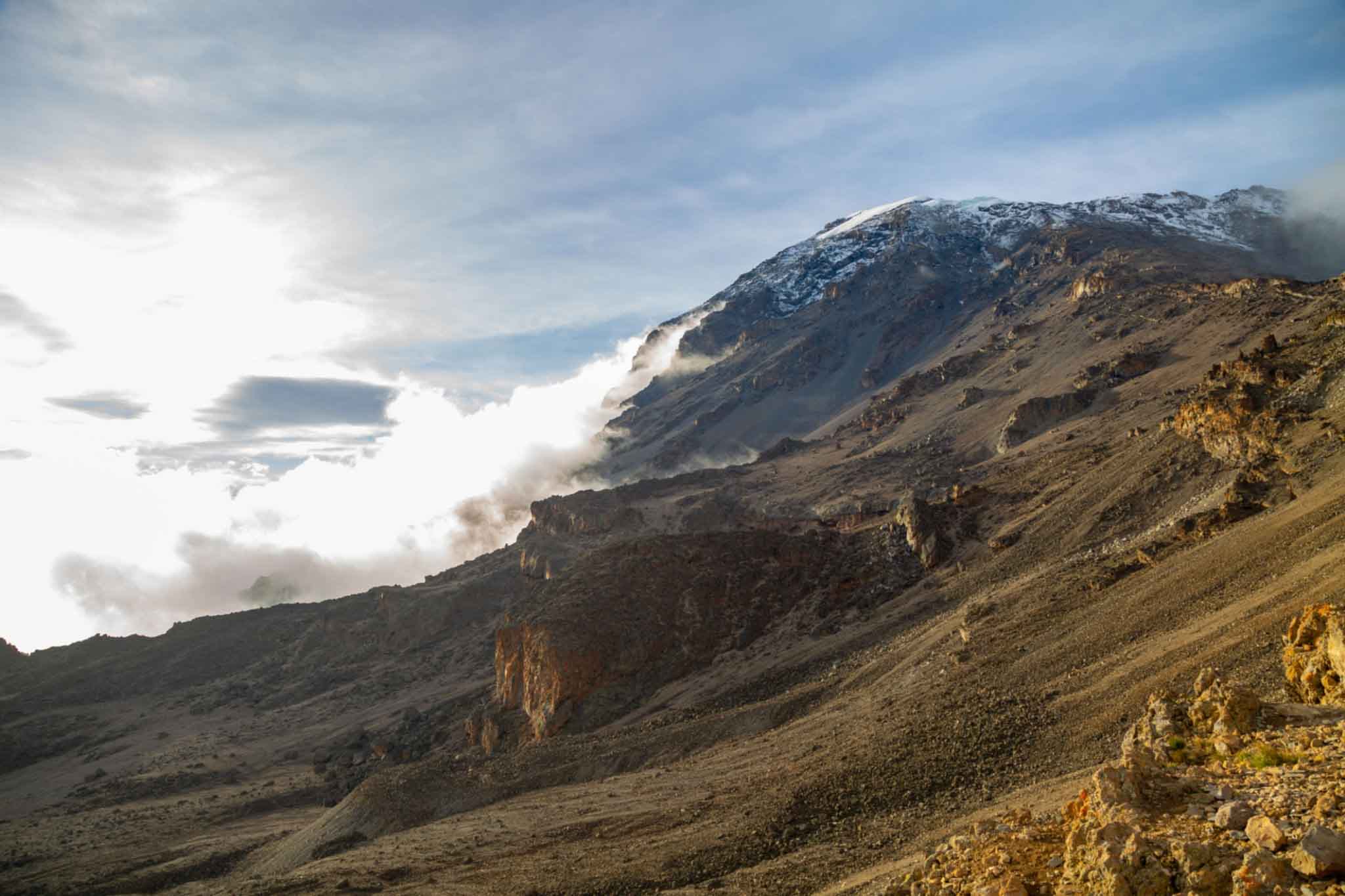
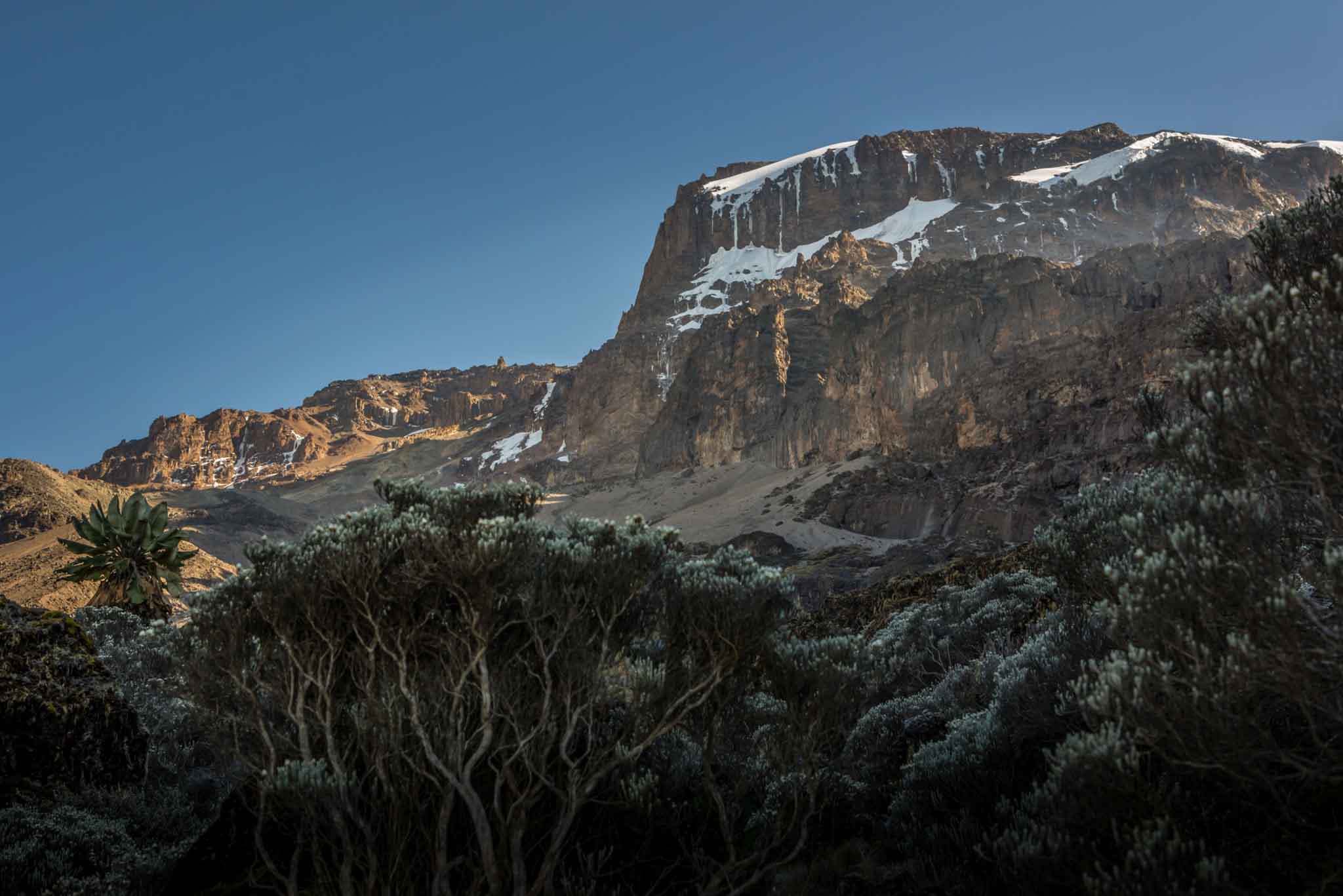
Marangu passes through Kilimanjaro’s classic sequence of climate zones: humid montane rainforest at the gate, heath and moorland around Horombo, the barren alpine desert of the Saddle, and the arctic summit zone at Uhuru Peak. Temperatures range from warm and often wet in the forest to well below freezing on summit night, so full layering is essential — though the huts mean you’re never sleeping on the ground. A warm sleeping bag is still needed for the cold nights at altitude.
Accommodation on the Route
Marangu is unique on Kilimanjaro for its permanent huts. You sleep in shared dormitory-style A-frame huts — Mandara, Horombo (twice) and Kibo — each with bunks, mattresses and a communal dining room; Mandara and Horombo also have basic washrooms. Meals are prepared by your mountain cook and served in the dining halls. It’s the most sheltered, sociable accommodation on the mountain — a real draw for those who’d rather not camp.
How Marangu Compares to Other Routes
vs Machame — Machame (“Whiskey route”) is the camping counterpart: more scenic and with better acclimatisation, but tougher and tent-based. Marangu is gentler and hut-based, but summits less reliably.
vs Rongai — both are quieter, gentler routes, and the two share a descent path; Rongai camps and approaches from the remote north, Marangu uses huts on the south-east.
vs Lemosho / Northern Circuit — those longer camping routes offer far better acclimatisation and much higher success rates; Marangu trades that for hut comfort and a shorter trip.
Explore all our routes: Machame · Lemosho · Rongai · Northern Circuit · Umbwe
Frequently Asked Questions
How many days does the Marangu Route take? Our Marangu climb is a 5-day trek, with a 6-day version available on request. The extra day adds an acclimatisation night at Horombo and noticeably improves your chance of reaching the summit.
Why is it called the “Coca-Cola route”? It’s the easier-going, hut-based option, historically the most developed and popular — so it picked up the “Coca-Cola” nickname, in contrast to the tougher, camping “Whiskey route,” Machame.
Is Marangu the easiest route up Kilimanjaro? It’s the gentlest underfoot and the only one with huts, which many find more comfortable. But “easiest” is misleading: its shorter, up-and-down profile gives less acclimatisation, so summiting is actually harder than on some longer routes.
What are the huts like? Shared dormitory-style A-frame huts with bunks and mattresses, plus communal dining rooms. Mandara and Horombo have basic washrooms. It’s the most sheltered accommodation on the mountain.
Should I do the 5-day or 6-day Marangu? The 6-day, with an extra acclimatisation day at Horombo, has a meaningfully higher success rate. If summiting matters most to you and time allows, the 6-day is the better choice.
When is the best time to climb Marangu? The dry seasons — January to mid-March and June to October — though its huts make it more forgiving than camping routes in the shoulder months.
Ready to climb Kilimanjaro’s classic hut route?
Our 5-Day Marangu Route trek is a private climb with licensed guides, all park fees and hut accommodation throughout.
Other Kilimanjaro Routes

Frequently Asked Questions
Kilimanjaro Trekking
WhatsApp ChatQuestions? Doubts?Chat with us via WhatsAppWe will respond as soon as possible. - Experiences