English

-
Destinations
- Experiences
- Kilimanjaro
- Trip Ideas Skip to the content
Rongai Route
Rongai Route Overview
Overview
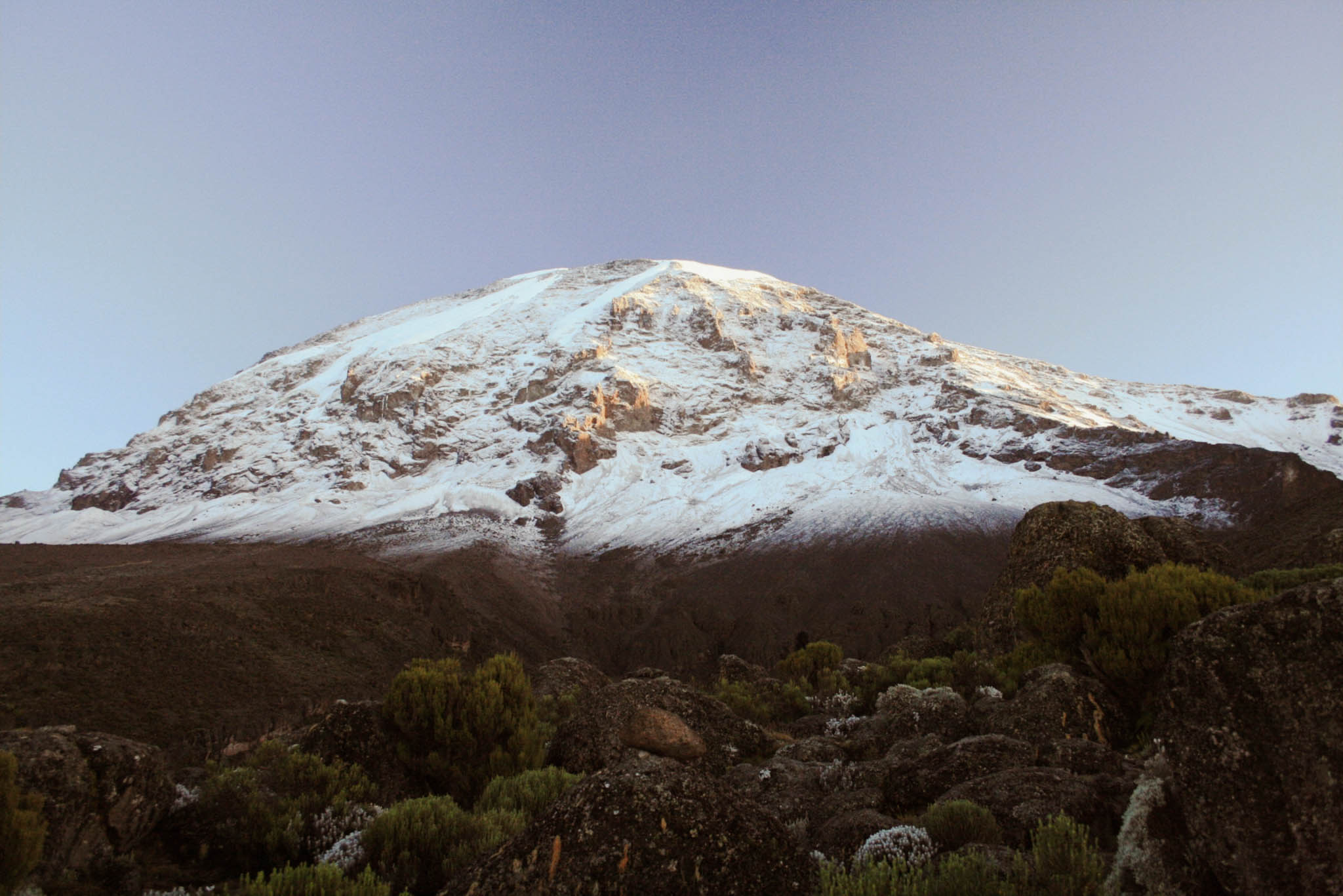
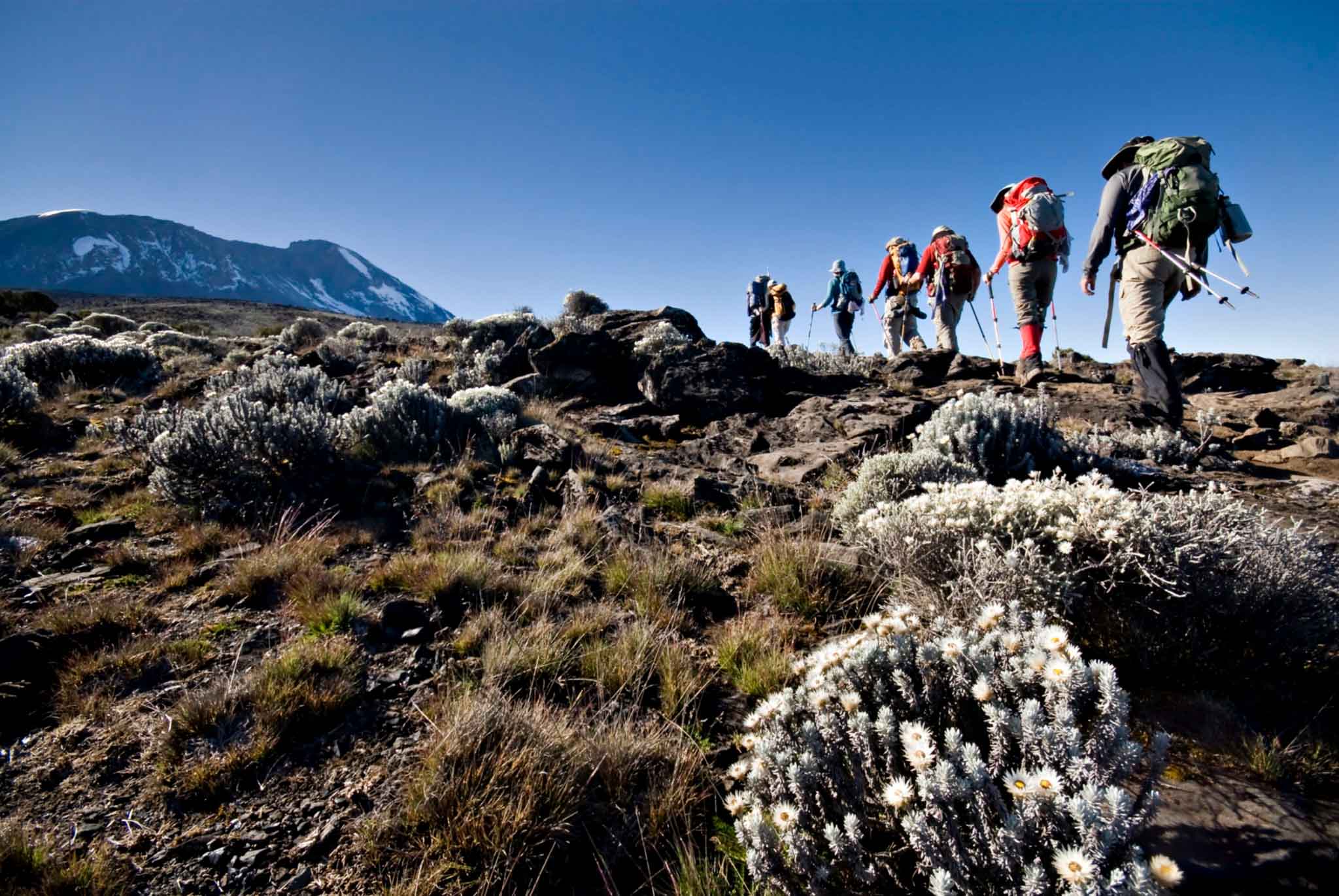
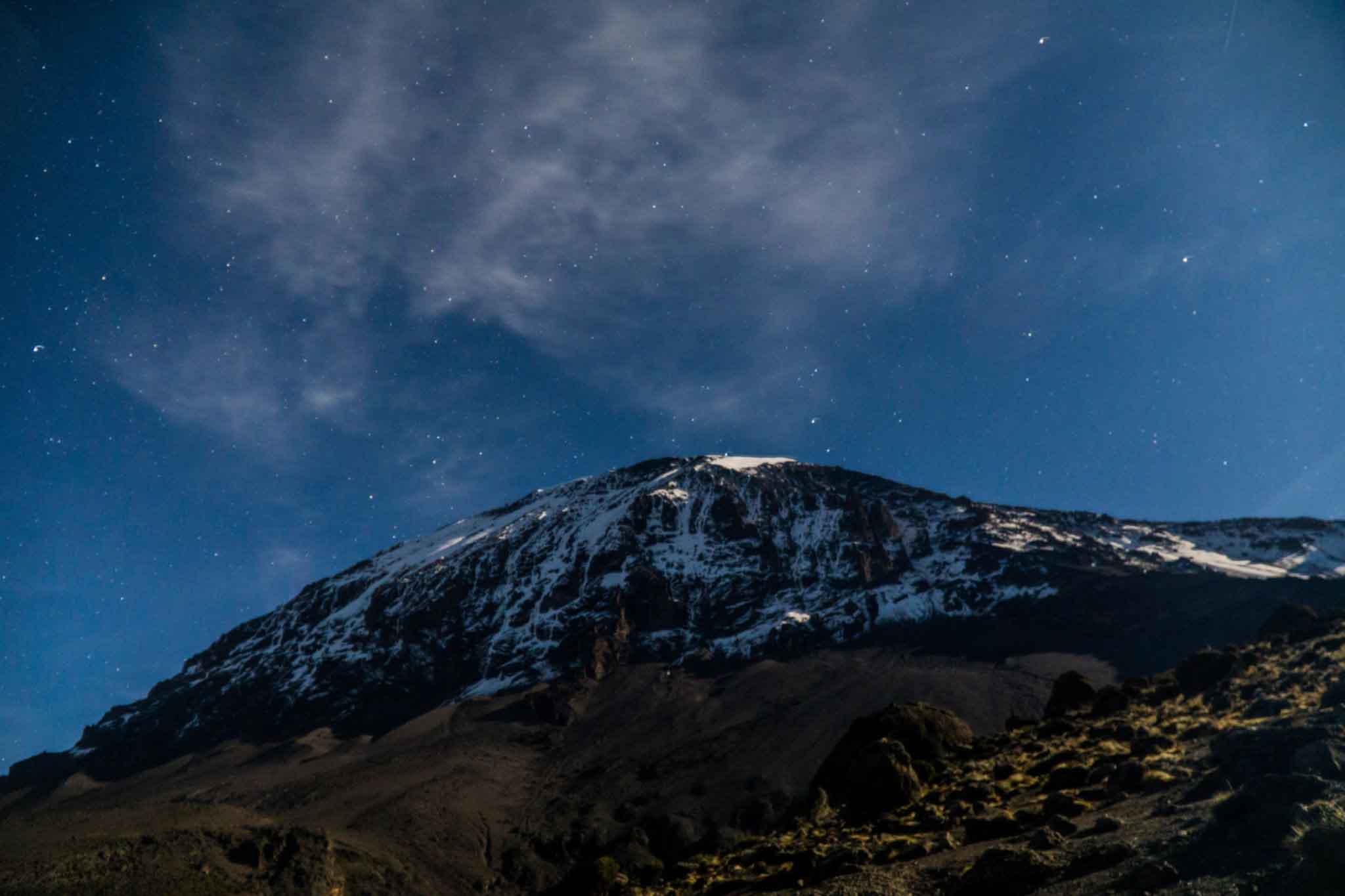
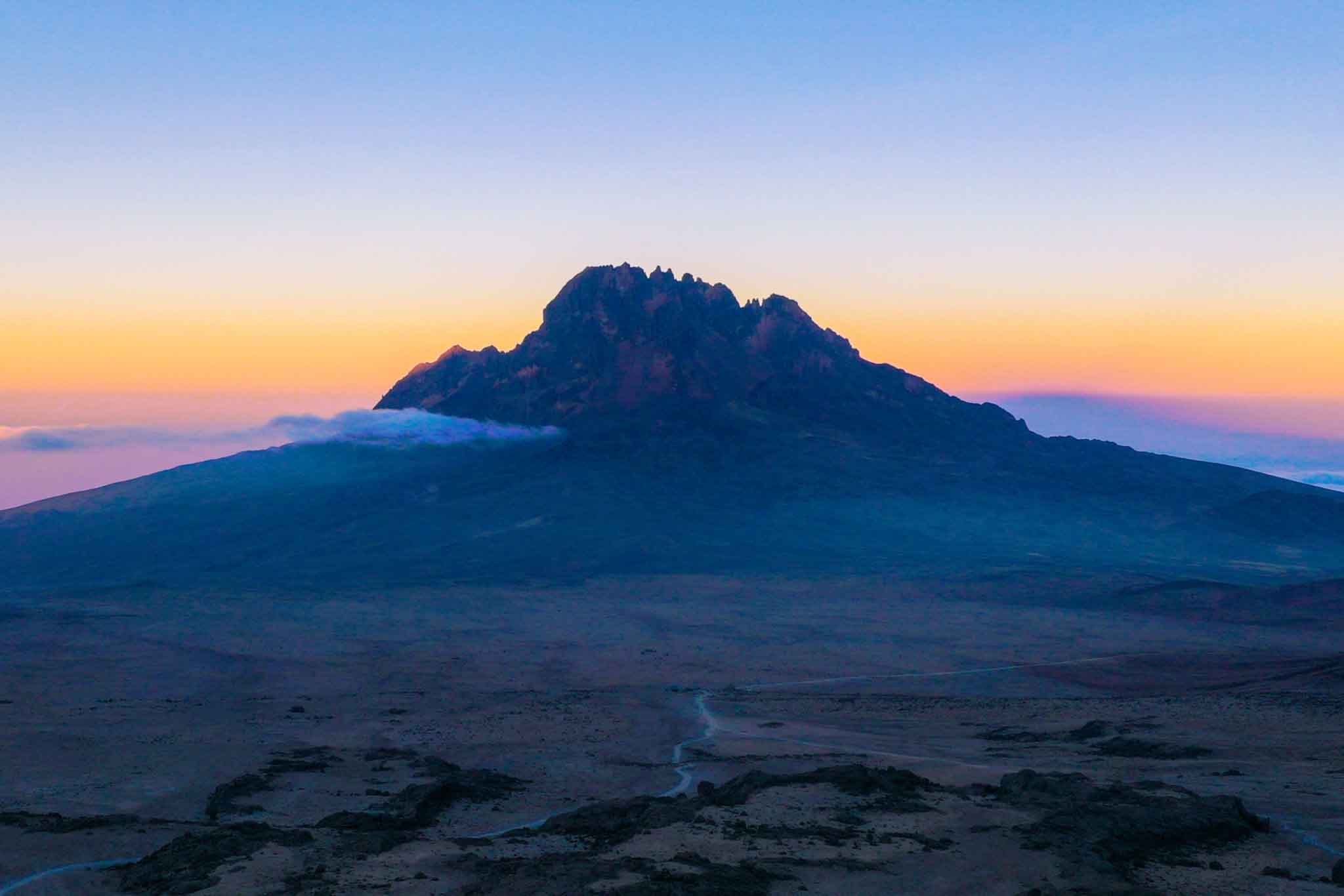
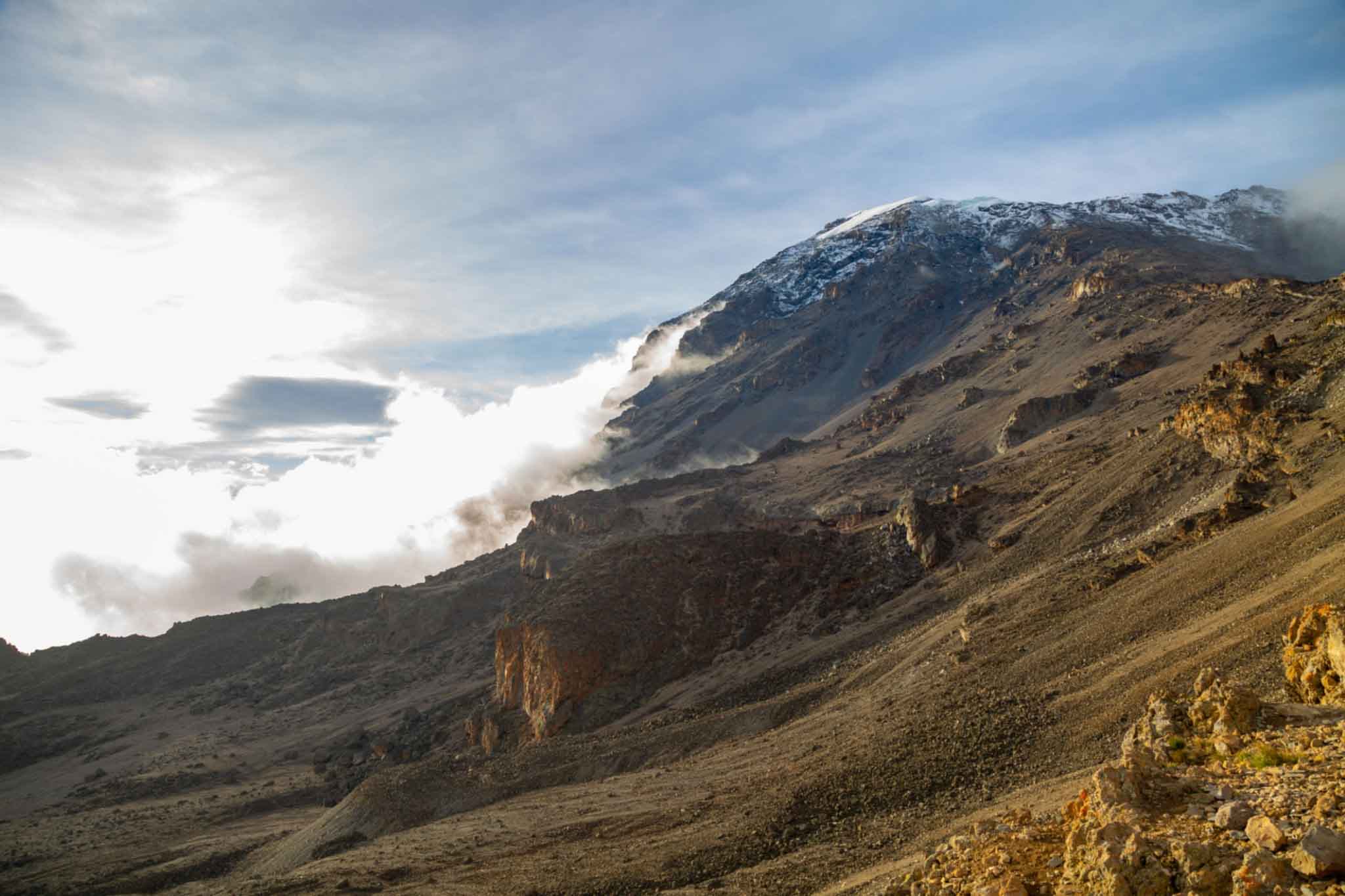
The Rongai Route is the only path up Kilimanjaro that approaches from the remote north, near the Kenyan border. Set on the mountain’s drier side and far quieter than the popular southern trails, it rewards trekkers who value solitude, wilderness and a gentler, steadier climb. Over six days it carries you from farmland and wild forest, across open moorland beneath the dramatic spires of Mawenzi, and up to Uhuru Peak — the highest point in Africa at 5,895m — before descending a completely different side of the mountain via the Marangu route.
Route at a Glance
Duration: 6 days on the mountain
Start gate: Nalemuru (Rongai) Gate, northern Kilimanjaro
Finish gate: Marangu Gate (southern side)
Summit: Uhuru Peak, 5,895m
Highest camp: Kibo Hut (summit base)
Accommodation: Full-service camping
Difficulty: Moderate — no technical climbing
Best for: First-time trekkers, quiet-trail seekers, wet-season climbs
Scenery highlight: Mawenzi Tarn alpine lake
Distance: Approximately 65–73 km
Success rate: Approximately 65–70% (6-day)
Why Choose Rongai
It’s the quiet side of the mountain. Because the northern slopes see far fewer climbers than the southern routes, Rongai offers a genuine sense of wilderness and solitude that busier trails rarely match.
It’s the best choice in the wetter months. The northern slopes sit in a rain shadow, so Rongai stays noticeably drier than the southern routes. When other trails are muddy, this one holds up — while remaining excellent through the main dry seasons too.
It’s approachable for first-timers. Steady, moderate gradients and a built-in acclimatisation walk at Mawenzi Tarn make Rongai well suited to those attempting Kilimanjaro for the first time. There’s no technical climbing — only fitness and resolve.
You see two faces of the mountain. Because you ascend from the north and descend via Marangu in the south, Rongai shows you two completely different sides of Kilimanjaro in a single trek — from dry northern moorland to lush southern rainforest.
Itinerary Summary
A day-by-day overview of the six-day climb. (For the full detailed itinerary, inclusions and to book, see our 6-Day Rongai Route package.)
Arrival Day — Arrive at Kilimanjaro International Airport, transfer to your hotel, evening pre-climb briefing and kit check.
Day 1 — Nalemuru Gate to Simba Camp. Scenic transfer to the quiet northern gate, then a gentle climb through farmland and montane forest (look for colobus monkeys) to Simba Camp, with views north toward Kenya.
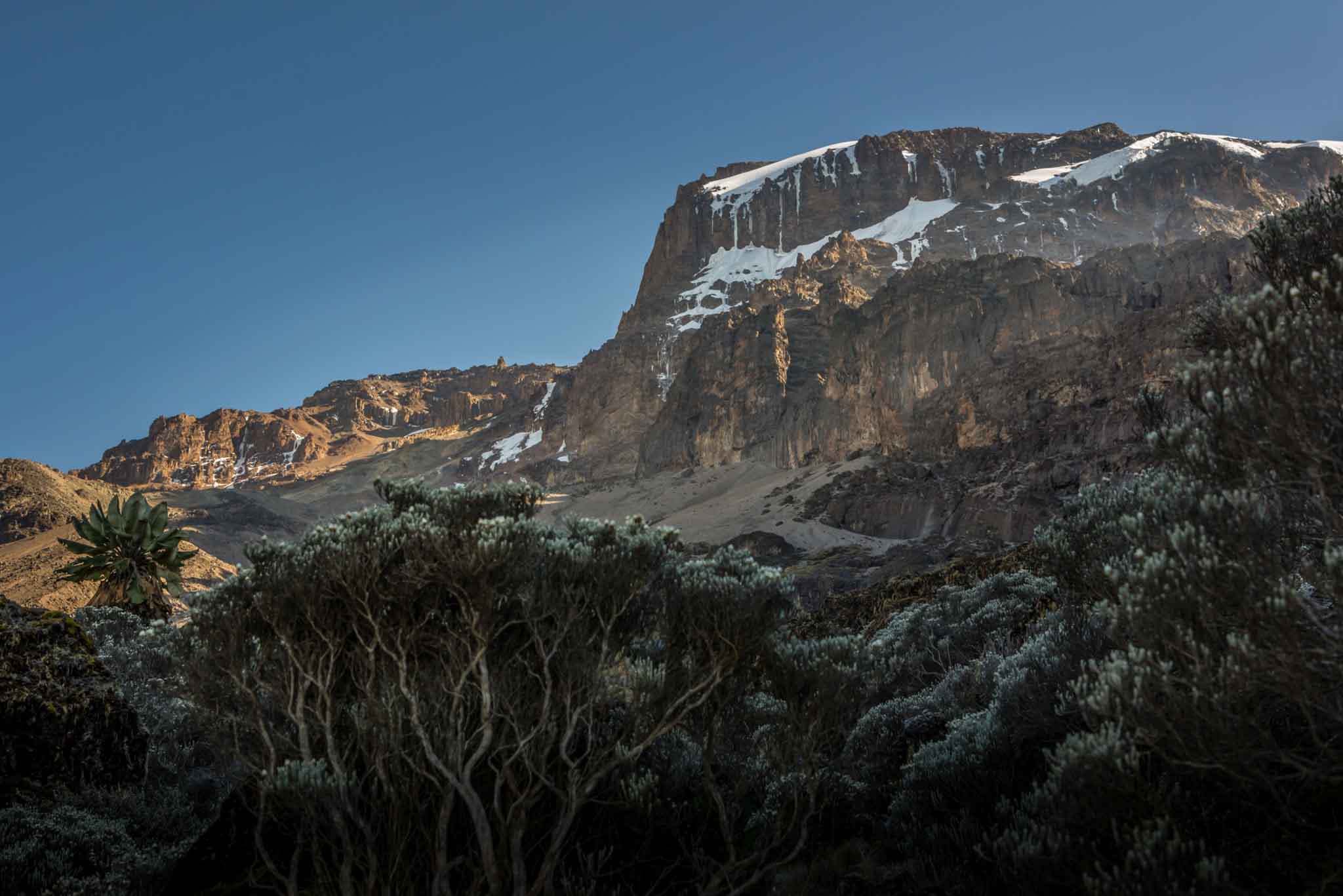
Day 2 — Simba Camp to Kikelewa Camp. Open, rolling moorland with the jagged spires of Mawenzi drawing closer.
Day 3 — Kikelewa Camp to Mawenzi Tarn. A short, steep morning to a striking alpine lake beneath Mawenzi, with an afternoon acclimatisation walk.
Day 4 — Mawenzi Tarn to Kibo Hut. Crossing ‘the Saddle’, the lunar alpine desert between Mawenzi and Kibo, to the summit base.
Day 5 — Summit Day: Kibo to Uhuru Peak, descend to Horombo. A midnight start to Gilman’s Point, along the crater rim to Uhuru Peak (5,895m) near sunrise, then down to Horombo Hut.
Day 6 — Horombo Hut to Marangu Gate. A long, easy descent through moorland and green rainforest to Marangu Gate, where you collect your summit certificate.
Departure Day — Transfer to the airport, or continue to a safari or Zanzibar beach extension.
➡️ See the full day-by-day itinerary and book the 6-Day Rongai Route →
Difficulty & Success Rate section:
Rongai is considered one of the more approachable Kilimanjaro routes in terms of terrain, with a steady ascent and fewer steep sections than trails like Umbwe or Machame. The built-in acclimatisation walk at Mawenzi Tarn (climb high, sleep low) is central to the route’s design. Our 6-day climb has an approximate 65–70% summit success rate. Because the single biggest factor in reaching the summit is time to acclimatise, we also offer a 7-day version on request, which adds an extra acclimatisation day and raises the success rate significantly — to around 80–90%. Just ask us if you’d like to climb over seven days. That said, no Kilimanjaro climb is guaranteed: good fitness, steady pacing and respecting the altitude are what get climbers to the top.
Best Time to Climb the Rongai Route
Rongai can be climbed year-round, but it comes into its own during the wetter months (around late March to May, and November), when the drier northern slopes offer a far better experience than the muddy southern trails. It’s also excellent through Kilimanjaro’s main dry seasons — January to mid-March and June to October — which bring the clearest skies and the most reliable conditions overall.
Weather Conditions
Approaching from the northern side, the Rongai Route tends to be drier than the southern routes thanks to its rain-shadow position. However, temperatures drop significantly at higher elevations, so proper layering is essential — from warm days in the forest to well below freezing on summit night. The dry conditions make Rongai an especially good choice during the rainy seasons.
Accommodation on the Route
Rongai is a full-service camping route. You sleep in quality tents with sleeping mats, and a shared mess tent and toilet tent travel with your group. Your camps follow the classic northern progression — Simba Camp, Kikelewa Camp and the spectacular Mawenzi Tarn — before Kibo Hut at the summit base, then Horombo Hut on the greener Marangu side during descent. A professional crew of licensed guides, a cook and porters looks after every camp, so you can focus on the climb.
How Rongai Compares to Other Routes
vs Marangu — Rongai is quieter and camps rather than uses huts, but the two share a descent path. Rongai’s remote northern approach feels far wilder.
vs Machame — Machame is more scenic and popular but steeper and busier; Rongai is gentler and far quieter.
vs Lemosho / Northern Circuit — those longer routes offer even better acclimatisation and scenery at higher cost; Rongai is a shorter, more affordable quiet-trail option.
Explore all our routes: Machame · Marangu · Lemosho · Northern Circuit · Umbwe
Frequently Asked Questions
How many days does the Rongai Route take? Rongai is most commonly climbed over 6 days on the mountain, which includes an acclimatisation walk at Mawenzi Tarn. A 7-day version adds an extra acclimatisation day for an even higher chance of summiting.
How difficult is the Rongai Route? It’s considered one of the more approachable routes, with steady, moderate gradients and no technical climbing. The main challenge, as on every Kilimanjaro route, is the altitude — which is why the built-in acclimatisation is so important.
Is Rongai good for beginners? Yes. Its gentle gradients, quieter trail and acclimatisation design make it a strong choice for first-time trekkers with a reasonable level of fitness.
When is the best time to climb Rongai? It’s excellent in the main dry seasons and, thanks to its drier northern slopes, is often the best choice during the wetter months when southern routes are muddy.
Where does the Rongai Route start and finish? It starts at Nalemuru (Rongai) Gate in the north and, unusually, descends the southern side to finish at Marangu Gate — so you see two different faces of the mountain.
What accommodation is used? Full-service camping, with quality tents and a supported crew of guides, cook and porters throughout.
Ready to climb Kilimanjaro’s quiet northern trail?
Our 6-Day Rongai Route trek is a private climb from $2,150 per person, with licensed guides, all park fees and full camping support.
Other Kilimanjaro Routes

Frequently Asked Questions
Kilimanjaro Trekking
WhatsApp ChatQuestions? Doubts?Chat with us via WhatsAppWe will respond as soon as possible. - Experiences